
Body Lines vs Flat Panels in Hail Repair


Dent Complexity
Why body lines resist simple PDR pushes
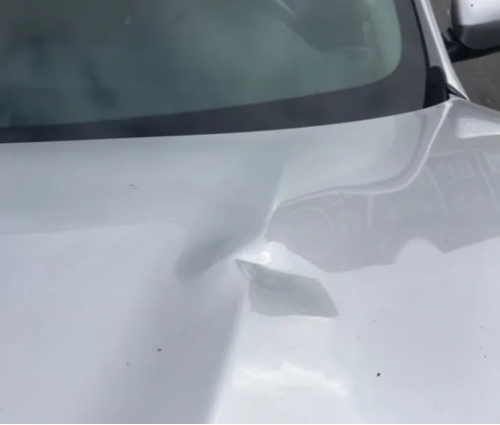
Body lines are the sharp creases that give panels shape and strength. When hail dents land on those ridges, the metal tightens, trapping energy along the profile. Pushing there requires precise leverage and smaller moves, or the ridge can flatten and reflect light unevenly. Skilled PDR techs slow down to protect that styling line.
Flat panels spread force differently. Dents land in softer fields, so metal moves more freely and the red is cleaner. But large, shallow lows still need control to avoid oil canning. Good access, stable bracing, and measured heat keep the surface crisp.
Flat panels behave differently under stress
On flat sheet metal, a hail hit stretches material in a small circle, pushing it beyond its elastic limit. The repairer reads the ring of tension with reflection lines and lights, then brings the low up in controlled stages. If the area is thin, quick taps around the crown relieve pressure. This avoids highs that ripple across the panel.
Curved flats behave better than dead-flat zones because tension naturally routes toward edges. Technicians use soft tips and guard pads to shape metal without scarring paint. They pause often to cool the panel and re-read reflections, preventing overshoot that would require time-consuming knockdown correction later. Consistency beats force when panels are thin. It keeps the gloss uniform.
Access still matters on flats.If braces block tool paths, glue pulling becomes the primary method. Tabs are placed to spread load, and pulls are moderated to avoid tearing clear coat or shifting adjacent highs. After each pull, the surface is leveled with taps that feather tension outward. Patience prevents texture and keeps the panel reading straight.
Reading metal and controlling stretch

A tight body line acts like a beam; stretch pools beside it, not on it. Repairs start by softening crowns around the dent so the center can rise cleanly. Technicians work from the outside in, nudging lows while balancing pressure along the ridge to keep the styling intact.
Flat panels flip that order. The tech first defines the outer ring with gentle taps, then walks the lowest point up using diffused lights and varied tip sizes. Heat is used sparingly to relax sharp memory, especially on aluminum. If pushing risks reflection distortion, they switch to glue tabs and short pulls, rechecking with the board after every move so texture stays even and any newly forming highs are corrected before they travel.
Sharp lines punish guesswork. Even a single over-push can flatten a radius and telegraph a bright spot down the door in sunlight. To avoid this, technicians limit stroke height, change tips frequently, and check symmetry from front and rear reflections. Small, accurate moves preserve shape. Knockdown work is equally measured around the line to prevent micro lows.
Access also shrinks near body lines because inner bracing often sits directly beneath them. If rods cannot reach cleanly, a glue-pulling sequence is built with smaller tabs and lower lift to keep tension balanced. Each pull is followed by light taps to blend shoulders before the next move. On painted edges and sharp stampings, extra protection and temperature control reduce the chance of cracked clear or imprinted tip marks that would require conventional refinishing. Final passes under cross-light confirm the line is true.
Access, bracing, and tool path choices
Every repair starts with a map of braces and openings. On doors and quarters, slots near latch areas or window gaps may give the straightest approach to a dent on a belt line. If that path risks sliding against glass or regulators, protective sleeves and tape are added to keep components safe. Mirrors help verify tip alignment.
Roof dents near rails often force angled tool paths. Technicians use softer tips and shallower pushes to avoid flattening the rail’s crisp break. When the angle is too extreme, they switch to glue tabs sized to the low. Short, repeated lifts with cooling breaks maintain paint safety and control tension.
Bracing adds stability but can mislead readings if positioned under the reflection source. Pros offset braces, lock the panel, and confirm tool placement by moving the board instead of the rod. That habit speeds work and reduces highs, especially where sharp styling lines cross thin skins on hoods and doors. Frequent re-reads under different light angles keep the line consistent.
When glue pulling makes more sense
Glue pulling shines when braces block tool access or paint risk is high. Tabs distribute force across paint, and controlled pulls lift metal without prying. On body lines, smaller tabs and lower lift keep the ridge sharp while shoulders are blended with light taps.
Adhesive cure time is brief but consistent for repeatable lifts.Success depends on surface prep and temperature. Panels are cleaned, warmed modestly, and cooled between pulls to manage tension. If a pull starts to peak, the tech releases early and knocks down gently before continuing.
The rhythm is methodical, preventing texture that sunlight would reveal on doors and hoods. Glue choice and tab size are matched to paint hardness and dent diameter.
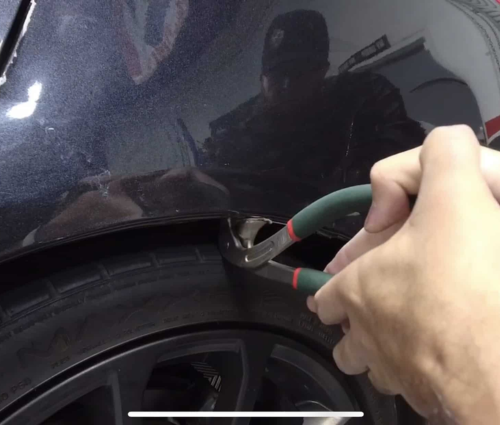
Glue pulling is not a cure-all. If paint is compromised, if the metal is overstretched, or if the line has kinks from a prior hit, pulling can amplify flaws. An experienced tech will stop, reassess the method, and sometimes recommend limited conventional work to support PDR. The right mix keeps finishes safe and reflections smooth. That decision protects value and avoids repainting areas that could remain original. Communication with the insurer explains why.
Aluminum, high-strength steel, and creases
Different metals react differently under hail loads. Aluminum workhardens quickly and reflects light harshly, so pushes must be smaller and more frequent. High-strength steel resists movement along body lines, concentrating stress near breaks. Reading which material you are on guides tool choice, tip size, and how much heat the panel will tolerate. Patience preserves paint and line quality.
On aluminum hoods, a tight dent on a style line often needs three stages: relieve crowns, lift the core in small increments, then rebalance shoulders. Overdriving a single push can create shiny highs that are hard to hide. On high-strength door skins, access and bracing dominate the plan, because strong stampings translate force further than expected. Cooling cycles between moves slow rebound and help the metal stay where it belongs.
Creases complicate both materials. A crease anchors tension along its path, so repairs must be sequenced carefully. The tech softens edges, defines the path with light taps, and then walks the low up with tool or tab work that follows the crease, not across it. Rushing across the path risks zigzag highs and visible texture. Finishing passes under cross-light confirm straightness, and any tiny pits are leveled with micro taps to restore a uniform read.
Estimating difficulty and setting expectations

Estimators weigh dent count, depth, location, and metal type to set time and method. Body line hits take longer because moves are smaller and knockdown passes are frequent.Access, glass proximity, and bracing can add R&I steps.
Photos and light-board reads help justify the method and prevent mid-repair pauses. Noting aluminum, panel thickness, and prior repairs sets proper pricing. Lighting photos show real progress needs.
Clear expectations keep surprises down. Customers should understand why a line dent might cost more than a nearby flat dent, and why glue pulling or staged pushes are chosen. A good estimate outlines checkpoints, possible supplements for clips or scans, and a realistic delivery date based on parts and severity. Documented photos and dent maps also help insurers approve faster.
When to contact VIP Hail Service
Reach out if hail dents sit on body lines, if an estimate undercounts line damage, or if access near glass and rails feels risky. Our team can read the metal, outline tool paths, and explain whether glue pulling, rod work, or limited conventional steps will keep the line crisp and paint original.
Bring photos under shade and any prior estimates. We will set expectations, show where time is spent, and plan R&I if braces or headliners affect access. You will get status updates at checkpoints and a test under cross-light before pickup, so the finished panel looks right in bright sun. If the method changes midstream, we will explain why and adjust the timeline. That transparency keeps rentals, costs, and delivery dates predictable. Questions about aluminum or high-strength steel are welcome.

VIP Hail Service | Plano, TX
Professional Hail Repair
Stay Up-to-date With Our Content
Subscribe to learn more about our mission!