
Understanding Crowns and OilCanning in Hail Repair


Dent Behavior
Why hail dents behave unpredictably
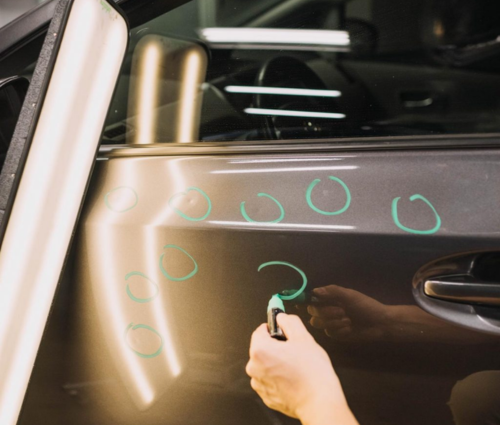
When hail hits metal, the force compresses the center and stretches the perimeter, forming a dent surrounded by tension. That stretched ring is called a crown, it traps energy that resists simple pushing from underneath. Without releasing it, the low will never rise cleanly, and the panel will spring back or distort.
Paintless dent repair works by balancing pressure between the crown and the low. Technicians read light reflections to find the tension’s direction and push precisely where it releases stress evenly. Rushing this step leads to highs, creases, or oil canning a floppy effect where the panel flexes under light pressure.
Crowns and tension release explained
A crown forms because metal has memory. When hail stretches it beyond its elastic limit, that stress remains locked until it’s redistributed. Skilled PDR technicians work around the dent’s edges first, gently tapping crowns down to free trapped energy. Once tension is relieved, the center can lift smoothly without overshooting. This method restores factory curvature without disturbing the paint’s bond to the metal.
Different metals react differently. Aluminum tightens quickly and needs softer tips and more cooling breaks, while steel moves slower but allows deeper reading with reflection boards. Heat use is minimal and always controlled, just enough to relax stress, never enough to compromise paint or adhesives. Proper technique makes the metal settle naturally, leaving no visible wave or color change.
Understanding crown behavior separates a true PDR craftsman from a panel beater. Precision in tool placement, stroke size, and timing defines whether the reflection reads straight under sunlight or shows hidden tension rings. The best repairs are invisible because energy was balanced, not forced back into shape.
Identifying and correcting high spots
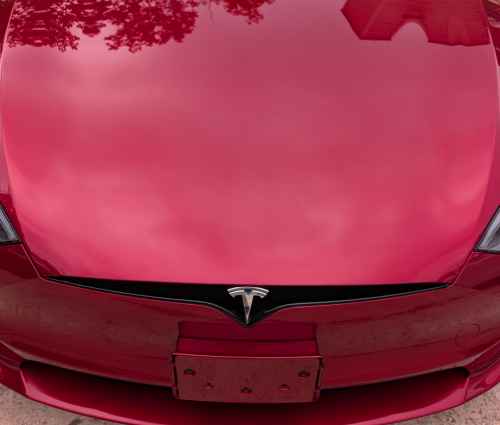
High spots appear when a technician pushes too far or releases tension unevenly. They reflect light brighter than surrounding metal and feel slightly raised to the touch. Left untreated, they distort the panel and cause secondary flexing known as oilcanning. The key is reading the board slowly and tapping highs with controlled knockdowns to reveal the surface before continuing.
Correcting highs starts by finding their origin. If the crown wasn’t fully relaxed, it pulls the raised point back over time, creating movement during temperature changes. Technicians manage this by balancing both sides of the dent, raising lows gradually while blending crowns evenly. Once the area stabilizes, the reflection line flows naturally again.
Even with perfect access, not every high comes from overpushing. Sometimes internal bracing or stiffeners create false highs when metal flexes differently under pressure. Experienced PDR specialists isolate the effect by checking reflections under multiple angles and using varying light intensities. If the shape stays static under changing light, it’s a real high; if it shifts, it’s panel tension. Knowing that difference prevents unnecessary knocks that might thin paint or harden the clear coat.
What oilcanning really means
Oilcanning describes a metal surface that moves in and out with pressure like a soda can top. It usually happens when metal has been stretched too far or when crowns weren’t fully balanced. The center becomes loose, and even after pushing, it lacks resistance. This issue can appear on large, thin panels like hoods or roofs after hail storms.
To prevent oilcanning, technicians focus on crown management before lifting the dent center. Crowns act as the anchor that gives the metal its structure. If that anchor is compromised, the whole panel behaves like a drum. Proper lighting, controlled tool strokes, and temperature stability maintain the natural tension across the skin. Glue pulling, when used correctly, also limits stretching by lifting evenly instead of prying from one point.
If oilcanning already exists, repairs shift to tension restoration. Technicians may blend outer zones with soft taps or introduce controlled heat cycles to shrink metal slightly. This process is delicate, too much shrink risks visible distortion. Done right, it restores rigidity without repainting, returning that crisp factory sound and feel when tapping the panel by hand.
The role of reflection reading in PDR
Reflection boards and lights map how metal moves. They reveal highs, lows, and subtle tension shifts the eye can miss. Reading them well takes patience and motion, walking the panel at varied angles to judge depth, spread, and where energy is hiding.
Skilled PDR technicians read those patterns like topographers. Each bend points to a decision: push, tap, or pause. They keep the board honest by changing perspective, measuring progress in tiny increments so the surface returns naturally instead of popping or wandering.
Mastery is rhythm and restraint. Heat stays controlled, tools aligned, reflections true. Metal talks back; the tech listens, adjusts pressure, and stops when balance appears, leaving paint intact and panel reading straight.
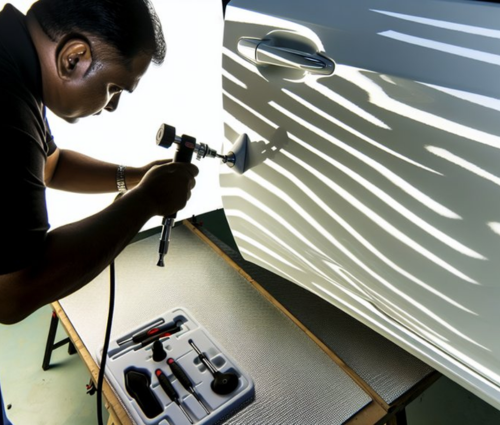
Reflection boards don’t fix dents; they translate them. What matters is how the technician turns that translation into precise pushes, gentle taps, or deliberate pauses. Weak reading invites hidden tension, delayed pop-backs, and faint scuffs from overwork that only sunlight exposes. Strong reading does the opposite: the panel moves in controlled steps, tension dissolves evenly, and the finish reads straight, indoors or out, under harsh shop lamps or bright sun.
Controlled heat and material recovery
Heat relaxes metal molecules and lets tension dissipate, but misuse can ruin a panel. Controlled warmth allows dents to move predictably and prevents paint cracking on cold surfaces. Each metal has its threshold: aluminum needs lower heat applied longer, while steel tolerates quick bursts. Temperature guns and infrared lamps keep it consistent, avoiding discoloration or swelling adhesives under braces.
The right balance between heat and time helps crowns respond evenly. Technicians cycle warmth and cooling to restore elasticity. Too much heat weakens the clear coat; too little leaves residual stress. Modern PDR combines science and art, each push feels different depending on metal thickness, panel curve, and prior damage.
Even after ideal repairs, panels are tested for stability. A soft press in the center checks whether the metal stays firm. If it moves, minor blending corrects stiffness gaps. The finish should remain uniform and the paint texture unchanged. This controlled approach keeps value high and avoids repainting, which can reduce resale quality.
Testing, inspection, and completion

Final inspection involves checking reflection lines under multiple lights and positions. Hail dents that once distorted reflections now read flat and even. Technicians verify that no crowns remain raised and that panels resist gentle pressure without flexing. A slight ping sound under a tap confirms natural tension is restored.
Road tests also play a role. Vibration and temperature changes can expose weak spots if tension isn’t balanced. That’s why experienced PDR shops recheck panels the next day before delivery. Customers see the difference—no waves, no oilcanning, just a clean surface that looks untouched. Consistency proves quality.
When to contact VIP Hail Service
If your vehicle shows stubborn dents, waves, or flexing after a hailstorm, contact VIP Hail Service. Our technicians specialize in balancing crowns, fixing high spots, and restoring proper tension without repainting. We combine advanced reflection lighting, temperature control, and precise toolwork to make panels read factorystraight again.
Schedule a free inspection to assess your vehicle’s condition. We’ll explain the repair plan, show where crowns are trapped, and outline how we’ll correct them safely.Each step is documented for insurance approval and peace of mind. Expect a strong, clean finish, no oilcanning, no waves, just seamless factory metal restored with care.

VIP Hail Service | Plano, TX
Professional Hail Repair
Stay Up-to-date With Our Content
Subscribe to learn more about our mission!