
Paint Thickness Gauges in Hail PDR


Hail repair tips
Why thickness readings matter for PDR
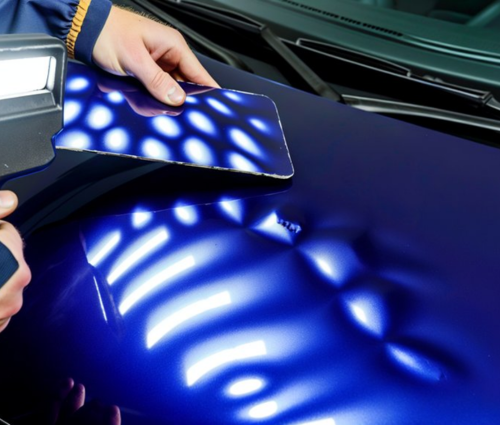
A paint thickness gauge gives an objective picture of your clear coat and color build before hail dent repair begins.Readings confirm factory panels or flag prior work. With real numbers, a technician plans push force, heat, and glue pulling to protect the finish and avoid risky guesses on edges.
Thickness data also sets expectations for results. Thin clear coats near body lines, aluminum panels, or blended respray leave less room for tool work. When numbers fall outside safe ranges, the shop can slow down, adjust lighting and temperature, or recommend limited repair to keep the OEM finish intact.
Gauge types and when to use them
Most body panels read accurately with dual ferrous and non ferrous gauges that use magnetic induction on steel and eddy current on aluminum. These meters report total build over metal, so results include primer, color, and clear. For mixed material vehicles, confirm the meter auto switches modes or manually select substrate so readings are apples to apples across hoods, roofs, and doors.
Ultrasonic gauges help on plastic or composite panels where magnetic methods fail. With the right couplant and calibration block, they can read total coating over non metal, and some advanced units estimate individual layer thickness. They are slower and require cleaner prep, so shops reserve them for bumpers, mirror caps, or rare composite roofs that need precise documentation.
Use the gauge during intake, again after decontamination under repair lights, and once more before delivery. Record ranges and outliers on a panel map. Temperature shifts change readings slightly, so measure in the same bay when possible. A repeatable process keeps results consistent and backs up repair choices if questions arise later.
Baseline measurements before any pushing

Factory paint varies by make, model, year, and plant, so look for smooth, repeatable ranges rather than chasing a single target during measurement and planning. Sudden spikes or dips within the same panel can indicate previous refinishing or sanding that may affect repair strategy. When the baseline is thin, mark those zones and adjust the plan: slower pushes, smaller tool tips, more rest cycles, and lower panel heat to keep the clear coat safe and stable throughout the entire process.
Mid repair checks prevent problems from snowballing. After releasing a cluster of dents on a roof or hood, pause and re measure the surrounding area, especially near body lines where stretch concentrates. If numbers fall close to your starting lows, reduce tool pressure and allow the panel to cool. Reassess under cross lighting to ensure micro highs are not forcing extra polishing that would remove precious clear coat thickness.
Before delivery, spot check the repaired panels against your intake map. You should see consistent ranges with slight variations from cleaning or temperature. If a section reads noticeably lower and gloss looks hazy, warn the customer and recommend a refinement plan rather than chasing perfection today. Clear documentation turns a tough conversation into a professional handoff and protects the finish you worked hard to preserve. Include photos beside the readings for added context and clarity.
Reading patterns that flag repaint risk
Factory panels usually show tight, even ranges across large areas. When you see a panel with high readings in the middle and normal numbers near edges, that often signals a previous respray. Orange peels that do not match adjacent panels, overspray on trim, or tape lines in jambs back up the gauge and push you toward caution during PDR.
Low, patchy numbers that jump between passes can indicate sanding or spot repair work that thinned clear coats. Body lines and edges are most vulnerable because they were light on paint from the factory. If the gauge shows repeatable lows there, consider limiting tool movement, avoiding aggressive tap downs, and discussing alternative outcomes with the owner before you advance.
Wild swings across a small area can suggest filler over metal, especially when a magnet feels weak on a supposed steel panel. Confirm substrate mode, retake readings, and check panel history if available. When doubts remain, pause and reset expectations; a careful blend or conventional repair might protect the vehicle better than full PDR in that spot.
Protecting clear coat during hail PDR
Select tip sizes that match dent depth and panel strength. On thin readings, start smaller and widen only as the metal responds. Softer caps reduce marring on clear coat that is already marginal, saving refinishing steps after the repair.
Work under dedicated hail lights and verify with neutral shop lighting before calling a panel done to ensure consistency. If the gauge and the lights disagree, favor the measurement and slow down for safer correction. The goal is smooth, uniform metal with factory clear still on the car, preserved fully and protected against unnecessary refinishing.
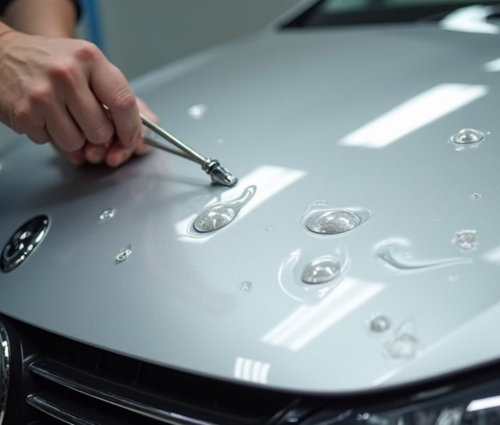
Small dents are not the only threat; repeated tool passes can thin a marginal finish even when dents look perfect under lights. Using a paint thickness gauge at intake, during repair, and at delivery gives you a record that guides technique. It also helps explain limits to customers, reducing surprise and protecting the vehicle’s original value when conditions call for a lighter touch or a blended alternative. That transparency builds trust and sets realistic outcomes.
Panel materials and safe ranges
Steel panels usually read higher and move more predictably under the tool, but body lines and crowns still demand restraint. Aluminum can start thinner and work harden quickly, so heat cycles and tiny pushes are your friends. Readings that trend low near hinges or door edges deserve extra caution, because factory variability and previous polishing can leave very little clear coat to work with.
Many modern vehicles mix substrates on the same body side. A steel door with an aluminum hood and plastic bumper will force you to confirm modes and reset expectations on every panel. If the driver door shows a wide spread while the passenger door is uniform, that asymmetry suggests prior work. The gauge does not accuse; it simply tells you where to slow down and communicate.
Rather than quoting a universal safe number, build safe ranges for each panel by averaging your cluster of readings and flagging any low outliers. Use the lowest repeatable value as your caution line. Above that, you can push and tap with confidence. Near or below it, shorten cycles, downsize tips, add rest time, and consider stopping when gloss changes. This method respects real vehicles, not theoretical charts, and keeps the original finish intact more often.
Documentation for insurers and customers

Clear photos next to readings tell the story better than numbers alone. Photograph the gauge display, the probe location, and the wider panel so orientation is obvious. Add notes that identify substrate, lighting, and temperature. When the claim file shows objective measurements, adjusters understand why you recommended careful PDR, limited repair, or a blended refinish on areas that tested thin.
Share the same map with your customer during the estimate. People value a straightforward explanation that connects readings to repair choices and final results. Include a copy with the invoice and store it in your system for future visits. If they return after a new storm, you can compare files quickly and confidently, saving time and protecting the finish again with documented baselines.
Key takeaways for protecting OEM finish
Measure before, during, and after PDR so every decision rests on data, not hope. Build a safe range for each panel and let the lowest repeatable reading set your caution line. When numbers and visuals disagree, trust the measurement and slow down. Good maps, repeatable lighting, and controlled heat protect the clear coat while delivering clean, factory looking results.
If measurements show thin or inconsistent paint, consider limiting tool travel, switching to smaller tips, or recommending a partial blend rather than chasing a perfect metal finish. Share the readings with clear photos so customers and adjusters understand the plan. The paint thickness gauge does not fix dents, but it protects outcomes by guiding technique and communication. Used consistently, it keeps the OEM finish safe and makes hail repairs faster, cleaner, and easier to approve.

VIP Hail Service | Plano, TX
Professional Hail Repair
Stay Up-to-date With Our Content
Subscribe to learn more about our mission!