
High-Voltage Safety During EV Hail Repairs


EV & Hybrid Repair
Why EV Hail Repairs Need Special Handling
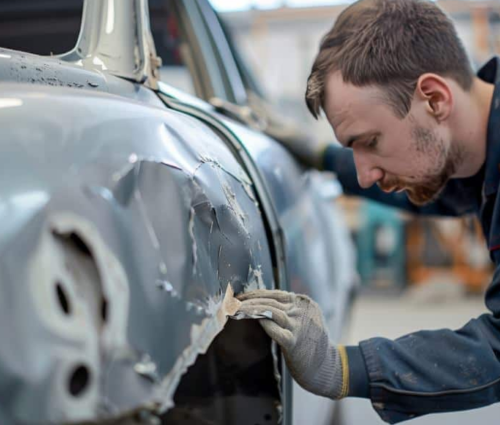
EV hail repair often involves removing headliners, trims, and roof components, and that work sits close to high-voltage wiring and sensors. Unlike gas cars, an EV can store energy even when it’s “off,” so a careless pry or misplaced fastener can create expensive electronic faults.
For safe electric vehicle PDR and the EV R&I process, shops follow high voltage safety steps: battery disconnect hail repair procedures, lockout/tagout, and a zero-potential check with approved meters. Orange cabling is secured, work zones are marked, and only a certified EV technician performs reconnection and diagnostics, so repairs stay safe and warranty-compliant.
Battery Systems and Safe Work Zones
Most EV packs are sealed under the floor and connected to the vehicle by high-voltage contactors, a service disconnect, and orange harnesses running to inverters and chargers. Before any R&I, technicians shut the vehicle down, remove the key from range, open the service disconnect, and wait the OEM-specified time so capacitors can discharge.
Shops then establish a safe work zone: cones, signage, and a restricted perimeter around the battery and cabling. Insulated mats and gloves are used when handling HV connectors, and tools are kept rated and dry. A meter check confirms absence of voltage, and lockout/tagout records show the system stays isolated while trims, headliners, or glass are removed.
During electric vehicle PDR, the goal is to protect both people and electronics. Keeping the 12-volt system stable, preventing static discharge, and routing non-insulated tools away from orange lines helps avoid sensor faults. When these protocols are followed, owners get the same clean hail repair results, without compromising battery integrity or onboard safety systems at all.
Technician Certification and Training

EV hail repair shops assign high-voltage tasks only to trained staff. A certified EV technician typically completes OEM or ASE-aligned EV training that covers shock hazards, insulated tool use, and safe battery isolation. They learn where service disconnects are located, how to read wiring diagrams, and how to follow OEM bulletins for each model during the EV R&I process. Recertification keeps procedures current as platforms change.
Training also includes identifying isolation faults and using lockout/tagout so no one re-energizes the system mid-repair. Shops document battery disconnect hail repair steps, verify zero potential voltage, and keep a second checker for reconnection. For owners, certification means the team can remove headliners and trims confidently, then restore sensors, airbags, and charging functions without guesswork.
Additional Hybrids and fully electric vehicles both use orange high-voltage cabling, but the layouts differ. A hybrid may have a smaller pack and more engine-bay components, while a full EV concentrates power electronics under the floor and in front or rear drive units. During EV hail repair, that difference changes access routes for roof and quarter R&I and determines where the safe zone is drawn.
Owners should also know that voltage can linger outside the main pack. Inverters, onboard chargers, DC-DC converters, and A/C compressors can hold residual charge in capacitors, so technicians follow controlled discharge and verification before removing trims or touching connectors. That’s why insulated gloves and mats show up even for “simple” headliner work. When the system is proven de-energized, the shop can proceed with the EV R&I process without risking shock, module damage, or nuisance fault codes.
Damage Risks from Improper R&I
Improper EV hail repair R&I isn’t just a workmanship issue, it’s a safety risk. Removing a headliner without isolating circuits can pinch an orange harness, strain a connector, or expose a module to static and moisture. A single misstep may trigger warning lights, disable driver-assist sensors, or cause charging failures that appear days later.
In severe cases, an untrained person could short high-voltage components, damage insulation, or create heat at a connection point, conditions that raise fire risk and, in rare scenarios, thermal runaway. Even if nothing dramatic happens, incorrect fasteners or poor routing can rub through shielding over time. That’s why high voltage safety rules are non-negotiable.
Certified teams reduce those risks by following OEM bulletins, using insulated tools, and documenting each battery disconnect hail repair step. Before and after work, they perform insulation-resistance tests, torque checks on service points, and full diagnostic scans to confirm systems are healthy. For owners, choosing a shop with a certified EV technician means R&I can be completed with the same care as any factory service procedure.
Common EV R&I Steps Explained
The EV R&I process for hail often starts with interior protection and a documented power-down. Technicians remove A-pillar trims, grab handles, and airbags covers as required, then lower the headliner to reach roof skins and rail areas safely.
Before connectors are opened, the high-voltage system is isolated, tagged, and verified at zero potential. Orange cabling is secured away from paths, and insulated tools handle HV points. Disconnections are photographed and logged for insurer documentation.
After dent repair, trims and clips are reinstalled to OEM fit, with torque specs followed on any service covers. Advisors keep a checklist so sensors, curtain airbags, and interior lights are confirmed before delivery. This disciplined sequence keeps EV hail repair safe and repeatable.
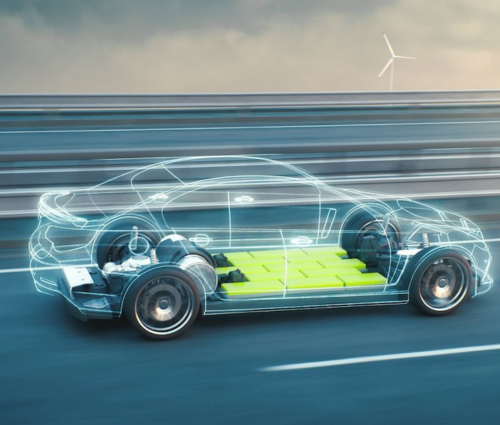
Verifying Safety Before Reconnection
Shop Liability and Warranty Compliance
High-voltage work carries real liability, so reputable shops treat EV hail repair like a controlled service event. They maintain current OEM procedures, keep Safety Data Sheets and calibration logs for test equipment, and limit HV tasks to trained staff. Many also carry specific garage and cyber liability coverage because EV modules and software are expensive. For owners, these safeguards mean the shop is prepared for both safety and documentation, not just dent removal.
Warranty compliance depends on proof. During the EV R&I process, shops document lockout/tagout, battery disconnect hail repair steps, and the zero-voltage verification in the file. They note which trims were removed, where connectors were unplugged, and what torque specs were applied on reassembly. This record protects you if a warning light appears later and shows insurers that labor steps were necessary, not inflated.
If unapproved work is performed, such as bypassing an isolation step or using non-insulated tools, insurance may dispute costs and an OEM warranty claim can become complicated. Some carriers will only reimburse high-voltage procedures when performed by a certified EV technician and backed by OEM bulletins or service guides. Choosing a shop that follows these standards protects your safety, your electronics, and your coverage outcome, especially when multiple supplements are involved.
Post-Repair EV Testing Procedures
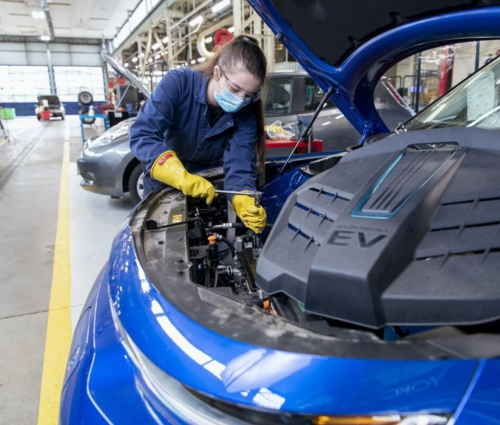
After reassembly, technicians run a full diagnostic scan and clear any temporary codes created during power-down. They verify no isolation faults, confirm 12-volt charging, and check that driver-assist cameras and radar have no calibration alerts. If the roof liner or pillars were removed, they also confirm curtain airbags and interior lights pass self-tests.
Next comes functional testing. A trained technician performs a short road test to confirm steering, braking, regen feel, and that no warning messages return. They monitor battery temperatures, cooling pump operation, and charge-port behavior, then verify the vehicle accepts AC or DC charging as applicable. Final paperwork lists the high voltage safety checks completed, reinforcing that EV hail repair was handled by certified EV technician procedures from start to finish.
What Owners Should Ask Their Shop
Before scheduling EV hail repair, ask a few direct questions. Are your technicians certified EV technicians, and which OEM or ASE training do they hold? Will you perform a documented battery disconnect hail repair with lockout/tagout and a zero-voltage verification? Do you use insulated tools, mats, and gloves for the EV R&I process? And will you follow current OEM bulletins for trim removal, airbag handling, and reconnection steps?
You can also ask how they prove safety before delivery: insulation-resistance testing, diagnostic scans, and a post-repair road test. Request that these steps be noted in your file for warranty integrity and insurer clarity. A professional shop won’t be offended, these questions show you’re protecting your vehicle and your family. When the answers are clear, you can feel confident that electric vehicle PDR is being performed with the same disciplined high voltage safety standards used by dealerships.

VIP Hail Service | Plano, TX
Professional Hail Repair
Stay Up-to-date With Our Content
Subscribe to learn more about our mission!